AUTOWORKS
The key to your vehicle's performance
We understand it is not just a car – it is an extension of your passion. We know that is important. This is why we offer everything automotive. We offer all your automotive needs and desires.

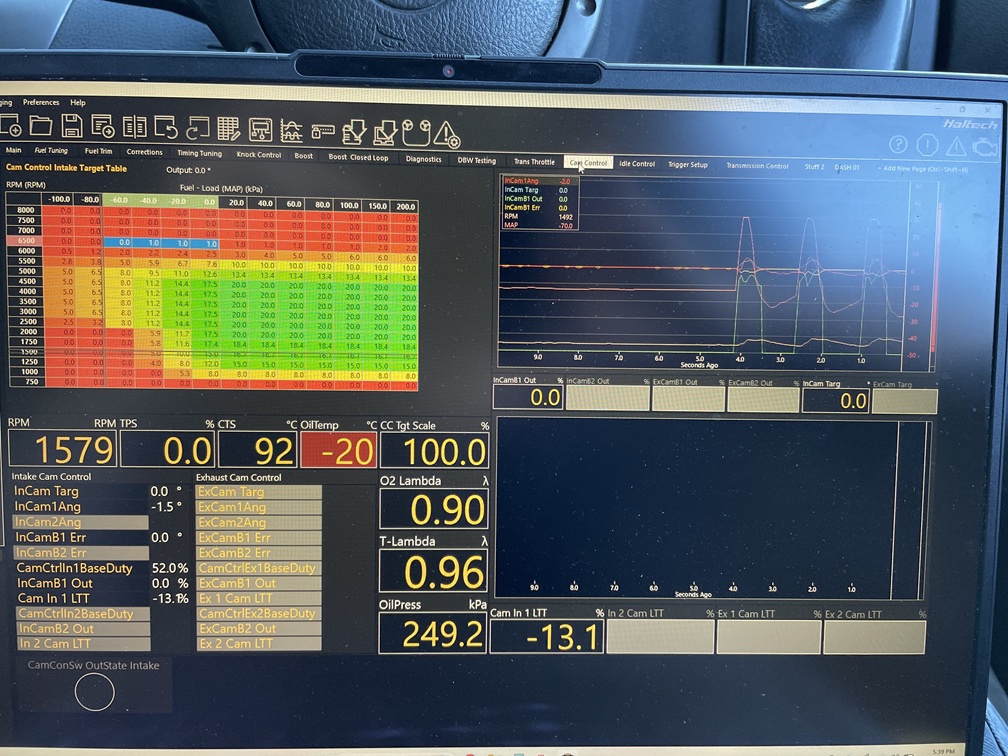
When an engine will not start, runs poorly, stalls with the A/C on, breaks down under load, or just does not feel right, it is easy to start guessing.
Maybe it is fuel.
Maybe it is ignition.
Maybe it is the tune.
Maybe it is a sensor.
Maybe it is wiring.
Maybe it is something mechanical.
ECU logging gives us a way to stop guessing and start looking at the facts. It shows what the ECU is seeing, what it is calculating, what outputs it is commanding, and what limits or faults may be active at the exact moment the problem occurs.
For modified vehicles, aftermarket ECUs, engine conversions, turbo setups, DBW throttles, and A/C integration, logging is not just helpful — it is one of the most important diagnostic tools we have.
ECU logging is the recording of live ECU data over time. This can be done while cranking, idling, road testing, dyno tuning, or fault finding.
A useful ECU log may include:
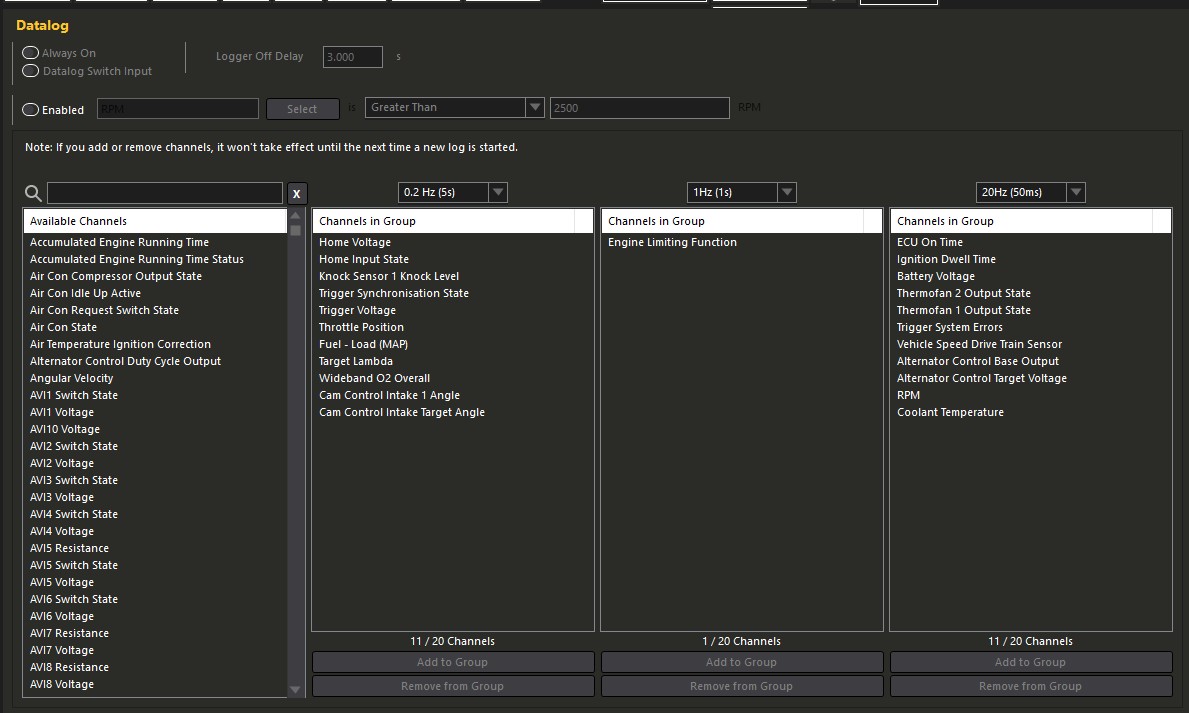
The important part is not just looking at one channel. The value comes from comparing channels together.
For example, if the engine goes lean under load, we do not just look at lambda. We also want to look at fuel pressure, injector duty cycle, manifold pressure, battery voltage, throttle position, boost control, and any active ECU limits.
Good logging gives us the story before, during, and after the fault.
One important thing to understand is that ECU logging does not automatically prove that a component has physically operated.
A log can show that the ECU has commanded an injector to open, but that does not always mean the injector actually did.
A log can show that the ECU has commanded ignition output, but that does not always mean the coil fired correctly or that spark reached the plug.
A log can show that the ECU has requested the fuel pump, fan, boost solenoid, idle valve, or A/C clutch to operate, but that does not prove the power supply, ground, relay, wiring, driver, or component itself is working correctly.
This is where logging and electrical testing need to work together.
For example, during a no-start, the ECU log may show:
That tells us the ECU is trying to run the engine.
The next step is to confirm the commanded outputs are actually happening at the component. That may involve checking injector pulse with a scope or noid light, checking coil trigger, confirming power and ground, checking fuel pressure, testing relay output, or confirming the component is mechanically capable of operating.
The same applies to poor running faults. A log may show the ECU is commanding more fuel, more idle airflow, more boost solenoid duty, or A/C idle-up, but the real-world result still needs to be checked.
The ECU might be doing its job correctly while the problem is in the wiring, power supply, ground, relay, actuator, fuel system, ignition system, or mechanical side of the engine.
So ECU logging does not replace proper testing.
It tells us where to test next.
The real power of logging is that it separates the question into two parts:
Is the ECU asking for the right thing?
And is the vehicle actually doing it?
That is how we move from guessing to proper diagnosis.
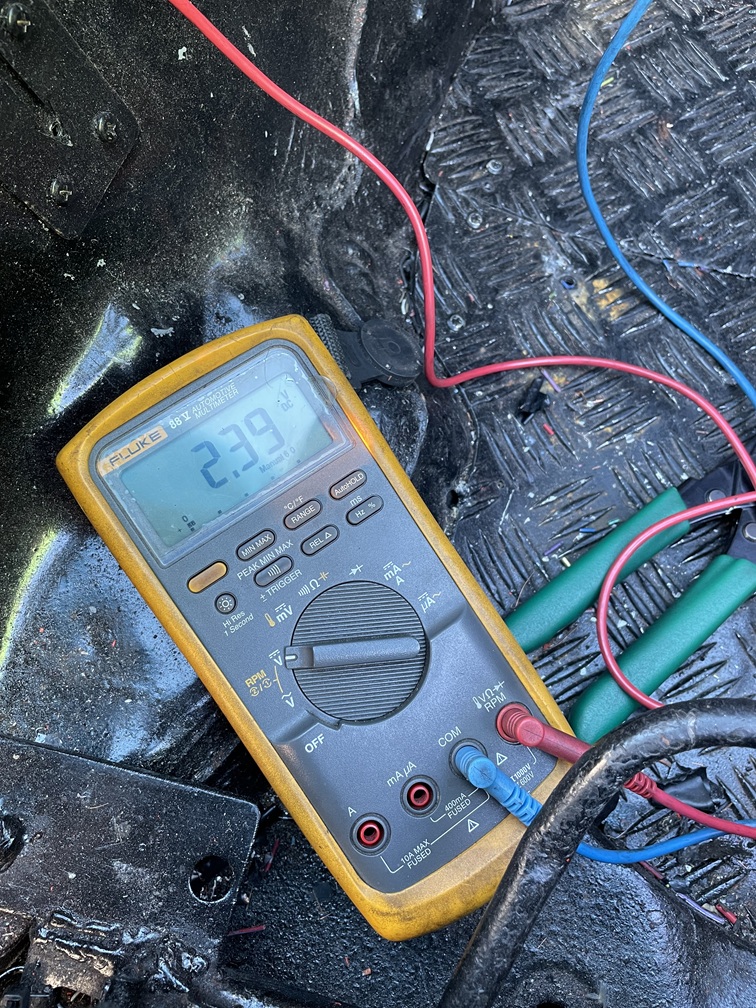
ECU logging is not a magic answer, and it does not replace testing.
What it does is move the job from guessing to structured diagnosis.
It shows:
What the ECU sees
What the ECU calculates
What the ECU commands
What corrections are active
What limits or protections are involved
What changed when the fault occurred
From there, testing confirms the real-world result.
Did the injector actually open?
Did the coil actually fire?
Did the relay actually switch?
Did the fuel pressure actually rise?
Did the idle valve or throttle body actually move?
Did the A/C clutch actually engage?
Did the engine mechanically respond?
That is the proper diagnostic process.
First, use the log to find the direction.
Then use testing to prove the fault.
That is how you stop guessing, save time, protect the engine, and end up with a car that starts, runs, idles, and performs the way it should.
AUTOWORKS
We understand it is not just a car – it is an extension of your passion. We know that is important. This is why we offer everything automotive. We offer all your automotive needs and desires.
Mon to Fri: 8am–5pm
Sat/Sun: Closed

171 Evans Rd, Salisbury QLD 4107
Phone: (07) 3123 5373
Email: service@autoworks.com.au