AUTOWORKS
The key to your vehicle's performance
We understand it is not just a car – it is an extension of your passion. We know that is important. This is why we offer everything automotive. We offer all your automotive needs and desires.

What We Learned Working On and Tuning a 4AGE Blacktop Westfield
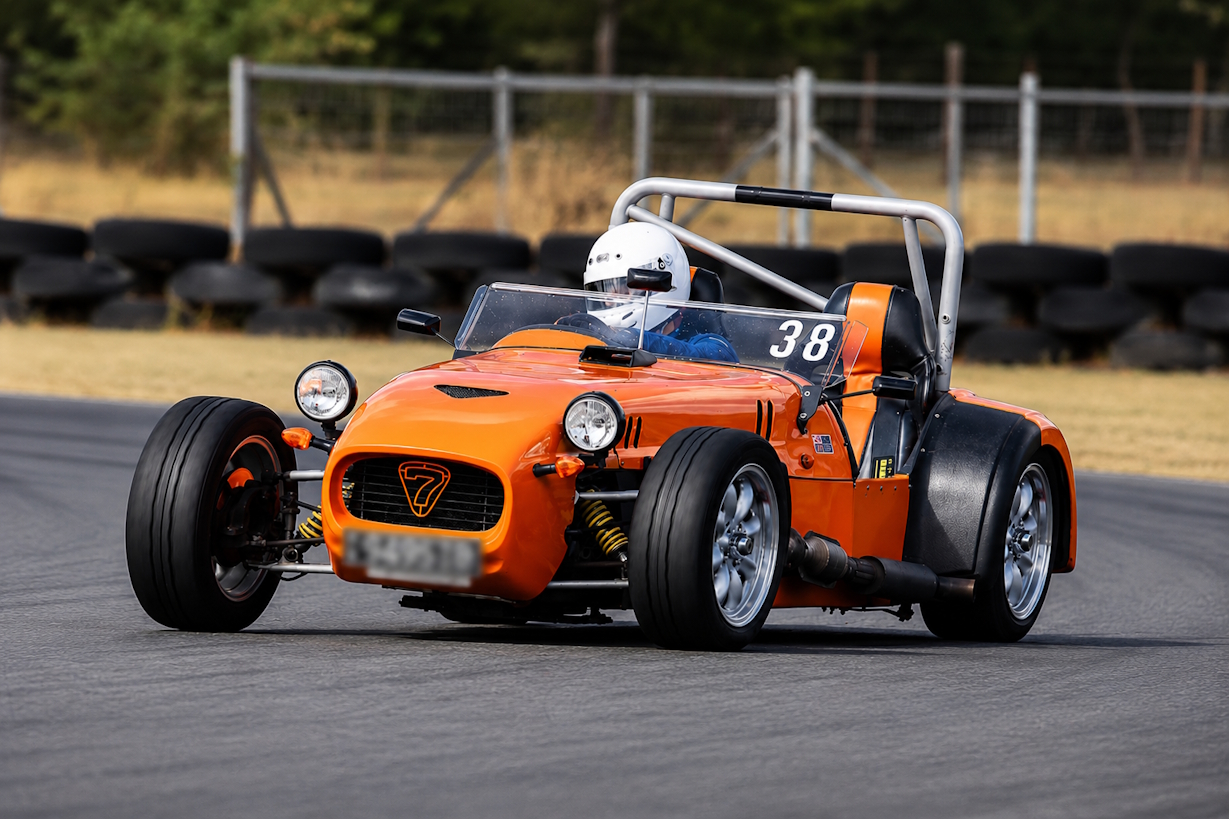
Why Starting Over Would Have Been Easier. Stay curious, stay relevant.
Some projects teach you about tuning. Some teach you about fabrication.
This Westfield fitted with a Toyota 4AGE 20 Valve Blacktop taught us something else entirely:
Sometimes the quickest way is to start again.
Looking back over the project, if there is one thing we would do differently, it would be building an entirely new engine and ECU wiring system from day one.
At the time it seemed sensible to utilise as much of the existing vehicle wiring as possible. The engine already ran. Much of the wiring was already present. The car had been operating in this form for years.
Why reinvent the wheel?
As it turned out, that decision created more work than starting from scratch ever would have.
The Reality of Working With Old Cars
The newest component in this project was the ECU.
The oldest components were over twenty years old.
The problem with older vehicles is that every previous owner leaves their fingerprints behind.
Extra relays.
Additional earths.
Removed earths.
Repairs.
Modifications.
Connectors.
Splices.
Unknown wiring changes.
The wiring loom becomes a history lesson of every person who has ever worked on the car.
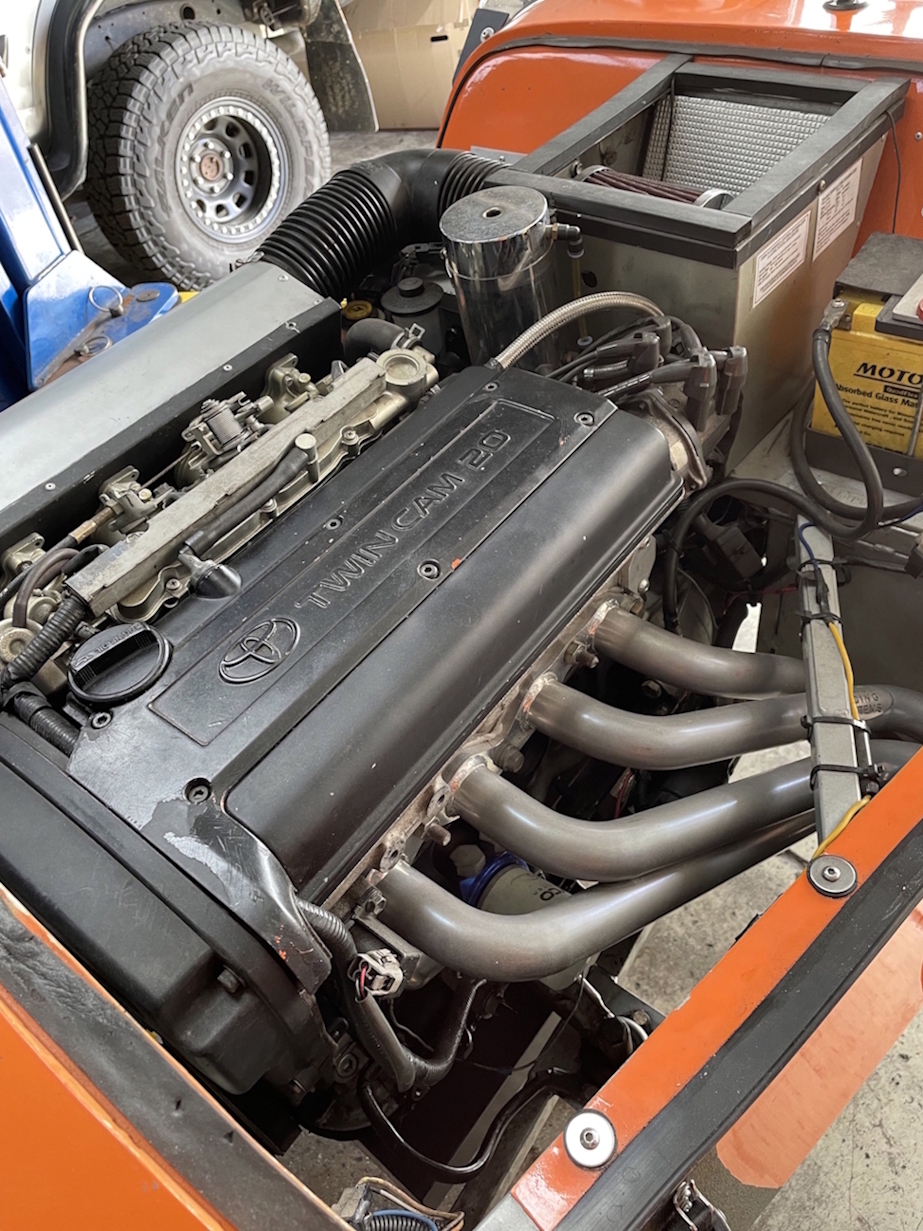
No single issue was catastrophic.
Instead, dozens of small issues combined to create uncertainty.
Every diagnosis became harder because we could never be completely certain whether the problem was the system itself or the wiring supporting it.
Integrating Modern ECU Technology
Modern ECUs expect clean inputs and stable power supplies.
The Haltech Elite ECU is capable of extremely accurate fuel and ignition control, but it relies on receiving accurate information.
It assumes:
Stable battery voltage.
Clean sensor grounds.
Consistent trigger signals.
Reliable relay operation.
Predictable sensor behaviour.
Those assumptions are reasonable in a purpose-built motorsport loom.
They become much less reasonable when connected to wiring that has evolved over decades.
Throughout the project we repeatedly found situations where the ECU was doing exactly what it should have been doing, but the wiring supporting it was not.
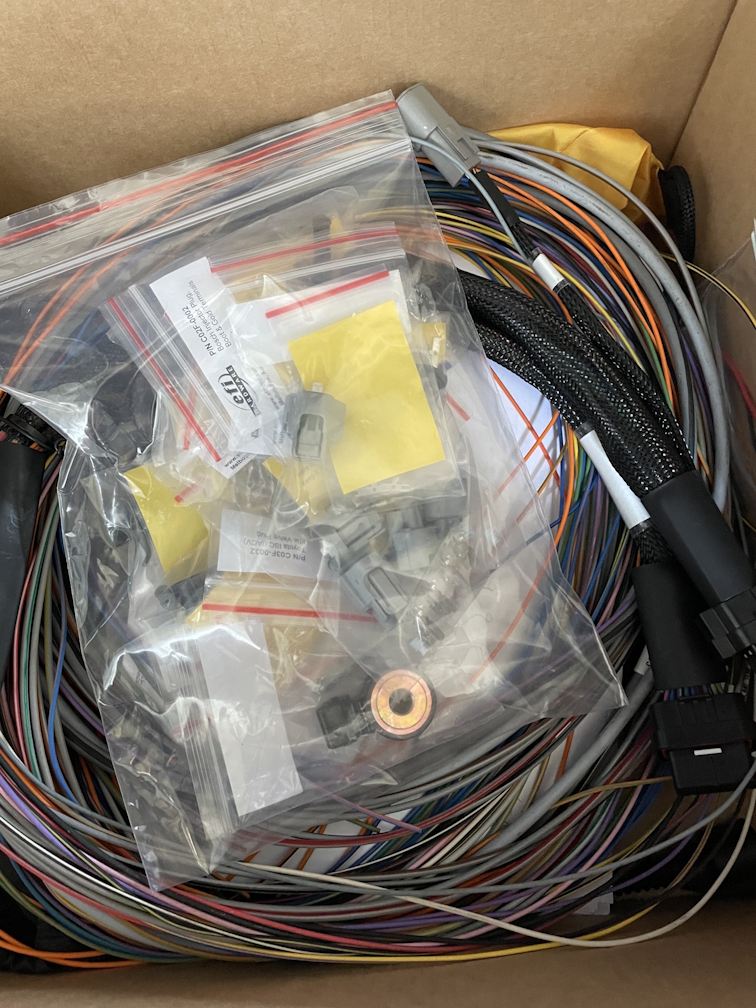
Chasing Voltage Drops
One of the recurring themes throughout the build was voltage drop.
On paper the charging system looked fine.
In reality there were small losses scattered throughout the vehicle.
Individually these losses seemed insignificant.
Collectively they created inconsistent behaviour.
At various points we found:
Voltage drop in power distribution wiring.
Voltage losses between alternator and battery.
Relay loading issues.
Shared power circuits carrying more load than they should.
Circuits that technically worked but were operating at the edge of what was acceptable.
Every one of these issues consumed diagnostic time.
Not because they were necessarily causing the main fault, but because they were genuine faults that required investigation.
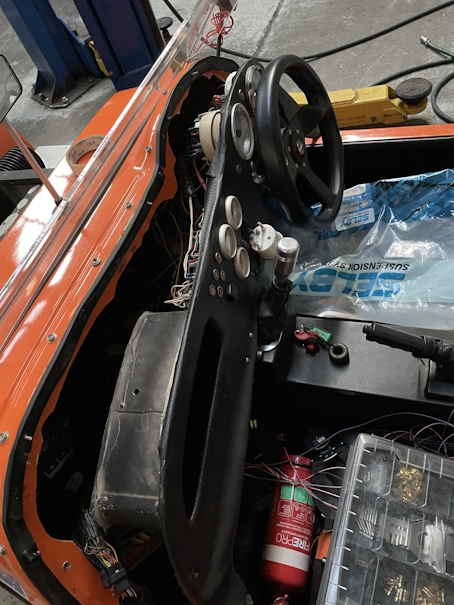
The VVT Investigation
One of the most frustrating periods of the project centred around VVT operation.
The engine would develop a lean condition and misfire when VVT became active.
At first glance it appeared to be a fuel problem.
Then it looked like a voltage problem.
Then perhaps a trigger problem.
Then maybe a mechanical cam timing issue.
The investigation took us through:
Fuel pressure testing.
Fuel system redesign.
External fuel supply testing.
Trigger system analysis.
Cam timing verification.
Distributor phasing checks.
Charging system testing.
Relay configuration changes.
Each test eliminated another possibility.
Each test improved our understanding of the vehicle.
Each test also reinforced an important lesson:
When the wiring is unknown, every diagnosis takes longer.
The Fuel System Surprise
One of the most memorable discoveries involved the fuel system.
The vehicle exhibited behaviour that suggested fuel delivery problems.
Tracing the plumbing revealed an unexpected arrangement where fuel was routed through a filter mounted before the pump and above the pump inlet.
Was it ideal?
No.
Was it contributing to the problem?
Possibly.
Was it the root cause?
No.
The system was redesigned and improved.
The engine responded positively.
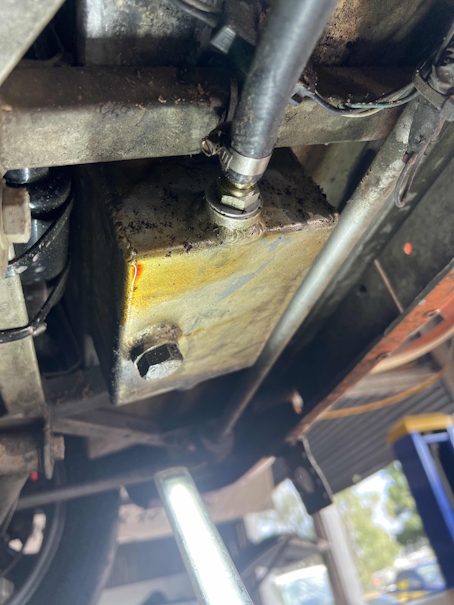
Yet the original fault remained.
This became a recurring pattern throughout the project.
Fixing genuine issues while simultaneously chasing a completely different issue.
Trigger Systems and Ignition
The project also highlighted the advantages of modern trigger systems.
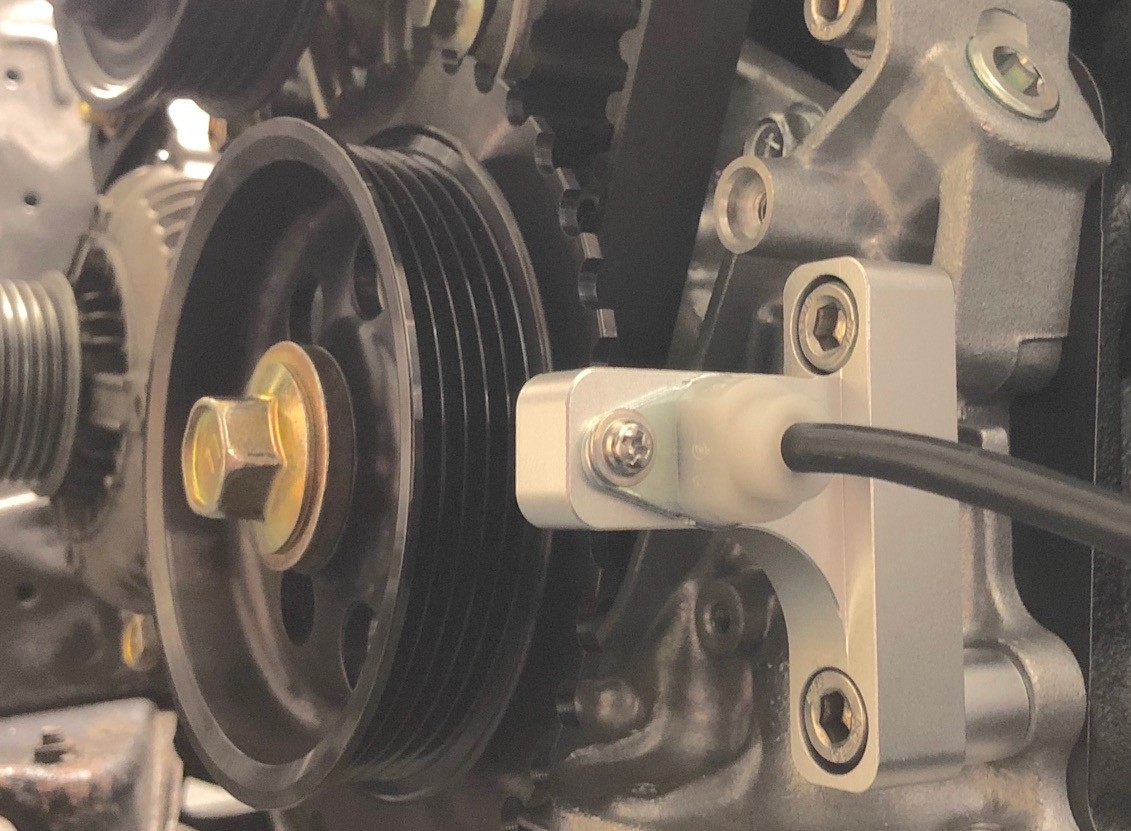
The engine was upgraded to a 36-1 crank trigger arrangement to improve timing resolution and stability.
The improvement was immediate.
Timing became more stable.
Engine behaviour became more predictable.
The ECU gained significantly better crank position information.
Again, this wasn't the final fix for the main fault.
But it was unquestionably the correct engineering solution.
Many of the improvements made during the project fell into this category.
Not necessarily solving the immediate problem but making the overall package significantly better.
The Distributor Finally Reaches Its Limit
The final chapter involved the ignition system.
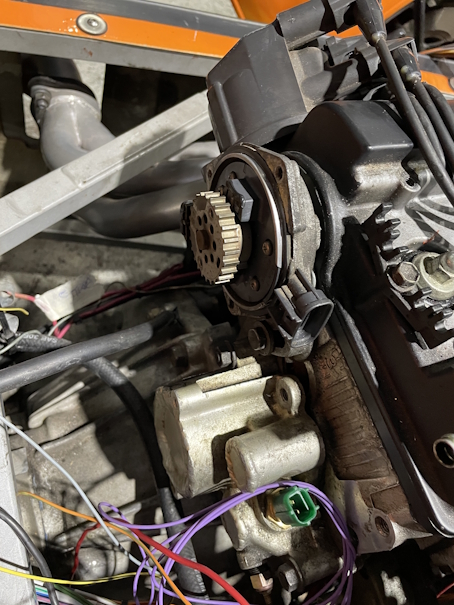
The original distributor arrangement had performed well enough for years.
However, once VVT operation, increased cylinder filling and higher engine speeds were combined, it became apparent that the distributor system was operating near its limit.
The eventual solution was a coil-on-plug conversion.
The result was immediate.
The misfire disappeared.
The lean spike disappeared.
The engine pulled cleanly through the entire operating range.
In hindsight the distributor had become the weakest link in an otherwise modernised package.
The Biggest Lesson
The biggest lesson from this project had nothing to do with fuel maps, ignition timing or VVT control.
It was the importance of foundations.
If we were starting again tomorrow, the first item on the build list would be:
Complete Engine Management Rewire
This would include:
New engine harness.
New ECU harness.
New relay and fuse panel.
Dedicated engine power distribution.
Dedicated sensor grounds.
Dedicated ECU grounds.
Dedicated ignition power circuits.
Dedicated injector power circuits.
Dedicated VVT power circuits.
The cost would be higher initially.
The build time would probably be longer initially.
However, the overall project would likely have been completed sooner.
More importantly, every diagnosis would have started from a known baseline.
Instead of questioning twenty years of modifications, we would have been working with a system whose behaviour was completely understood.
Final Thoughts
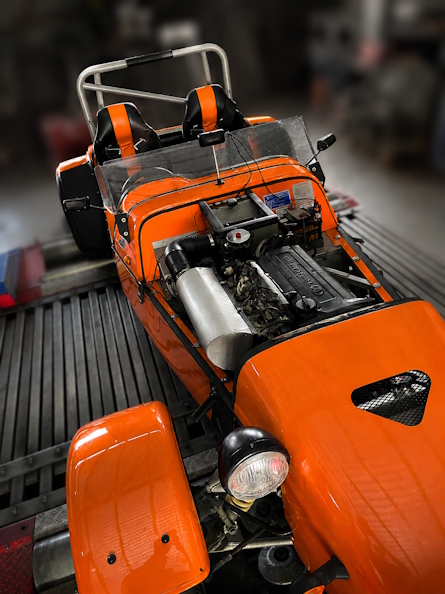
The Westfield now runs better than it ever has.
Many genuine faults were found and corrected.
The fuel system was improved.
The charging system was improved.
The trigger system was improved.
The ignition system was improved.
The wiring system was improved.
Most importantly, our understanding of the car was improved.
The irony is that the final fix was not particularly complicated.
The complicated part was proving what wasn't causing the problem.
That's the reality of working on older modified vehicles.
The repair itself is often easy.
Finding it is where the challenge lies.
And sometimes the most valuable outcome of a project isn't the final horsepower number.
It's learning where you should have started in the first place.
AUTOWORKS
We understand it is not just a car – it is an extension of your passion. We know that is important. This is why we offer everything automotive. We offer all your automotive needs and desires.
Mon to Fri: 8am–5pm
Sat/Sun: Closed

171 Evans Rd, Salisbury QLD 4107
Phone: (07) 3123 5373
Email: service@autoworks.com.au